News Update
news & Blog
18
Jul
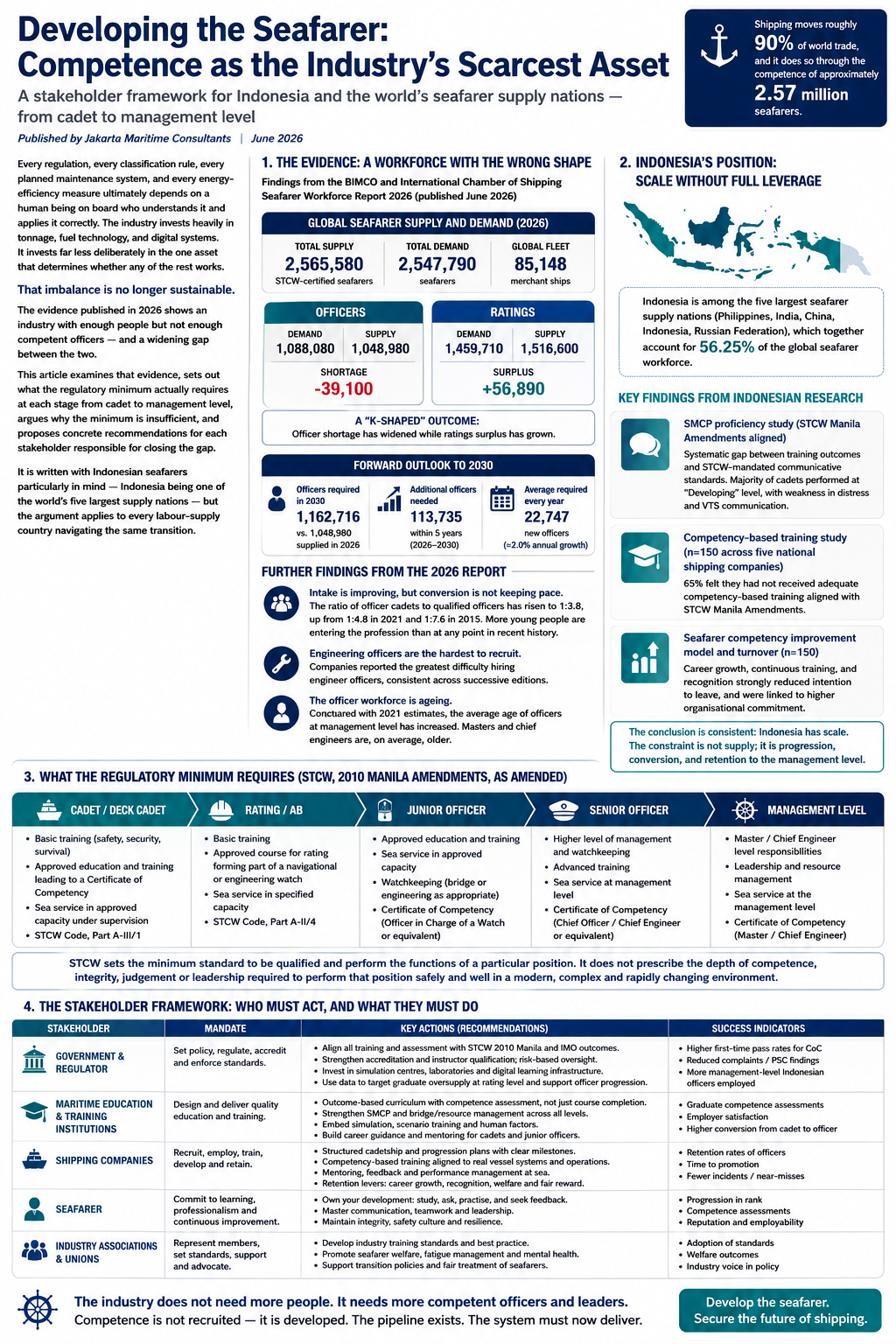
Developing the Seafarer: Competence as the Industry’s Scarcest Asset
Shipping moves roughly ninety percent of world trade, and it does so through the competence of approximately 2.57 million seafarers. Every regulation, every classification rule, every planned maintenance system, and every energy-efficiency measure ultimately depends on a human being on board who understands it and applies it correctly.
Read More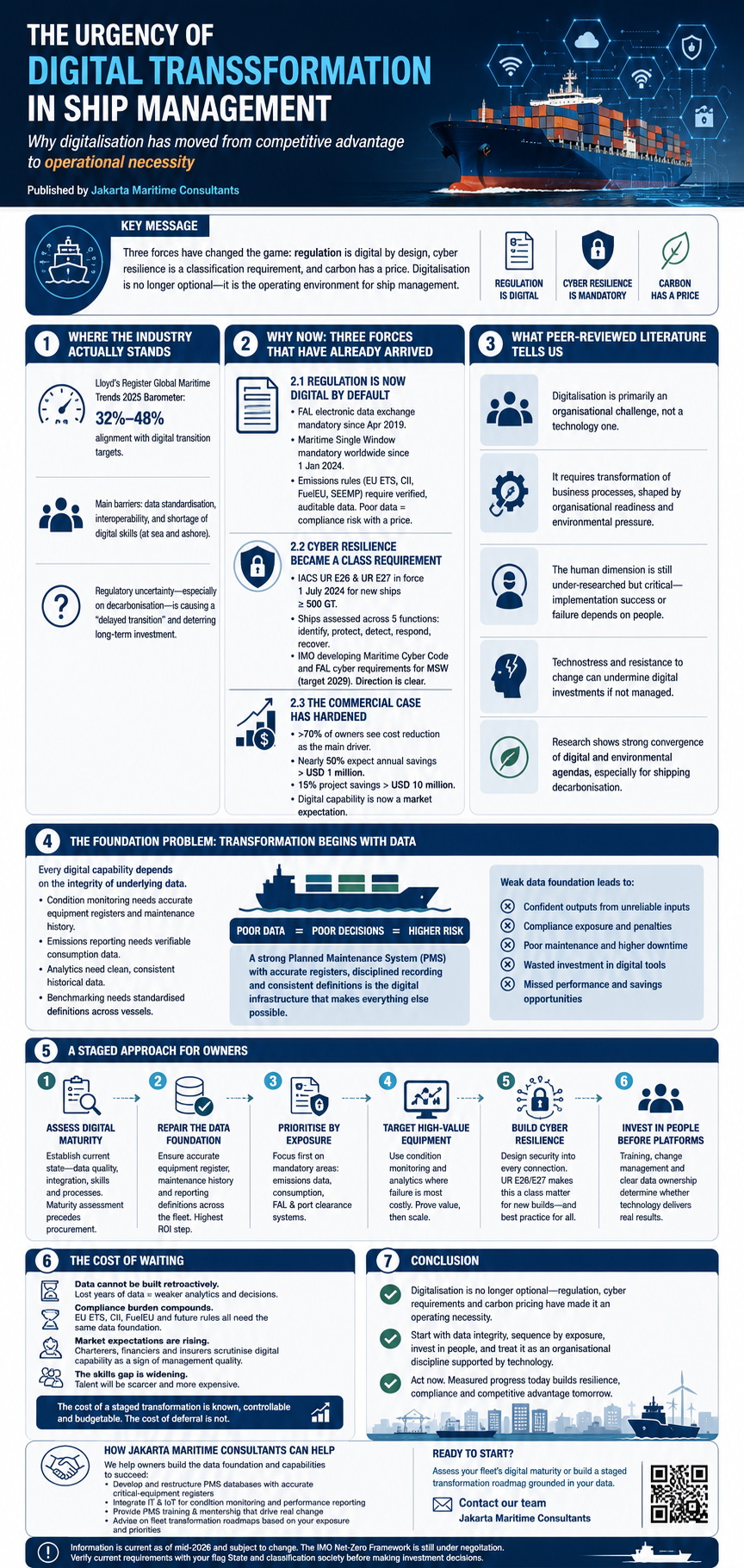
18
Jul
The Urgency of Digital Transformation in Ship Management
For most of the last decade, digitalisation in ship management was discussed as an opportunity — something forward-looking owners might pursue for competitive advantage, and something the rest could defer until the technology matured and the business case became clearer. That framing is now out of date.
Read More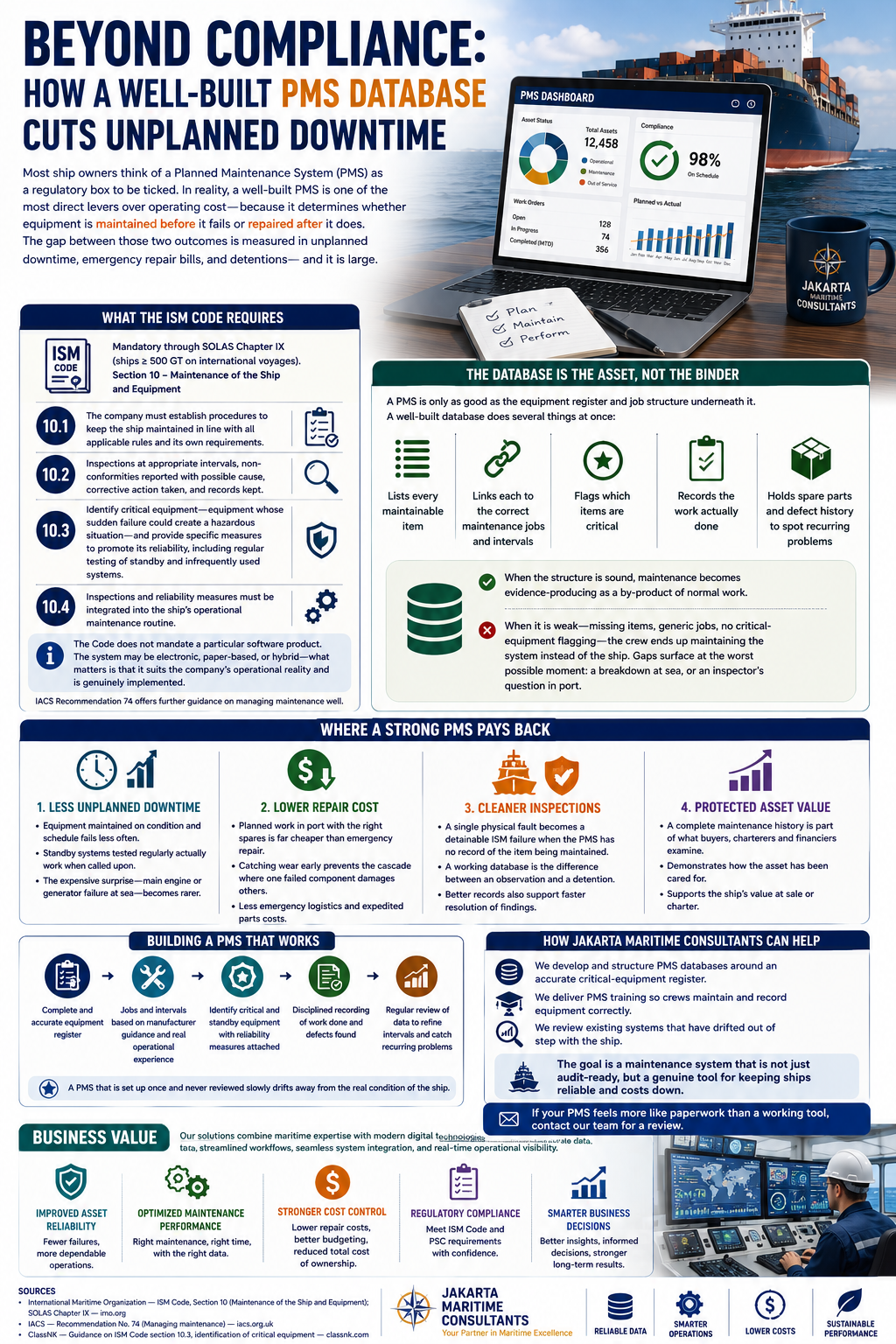
29
Jun
Beyond Compliance: How a Well-Built PMS Database Cuts Unplanned Downtime
Most ship owners think of a Planned Maintenance System (PMS) as something the auditors ask about — a regulatory box to be ticked. That view sells it short. A well-built PMS is one of the most direct levers an owner has over operating cost, because it determines whether equipment is maintained before it fails or repaired after it does.
Read More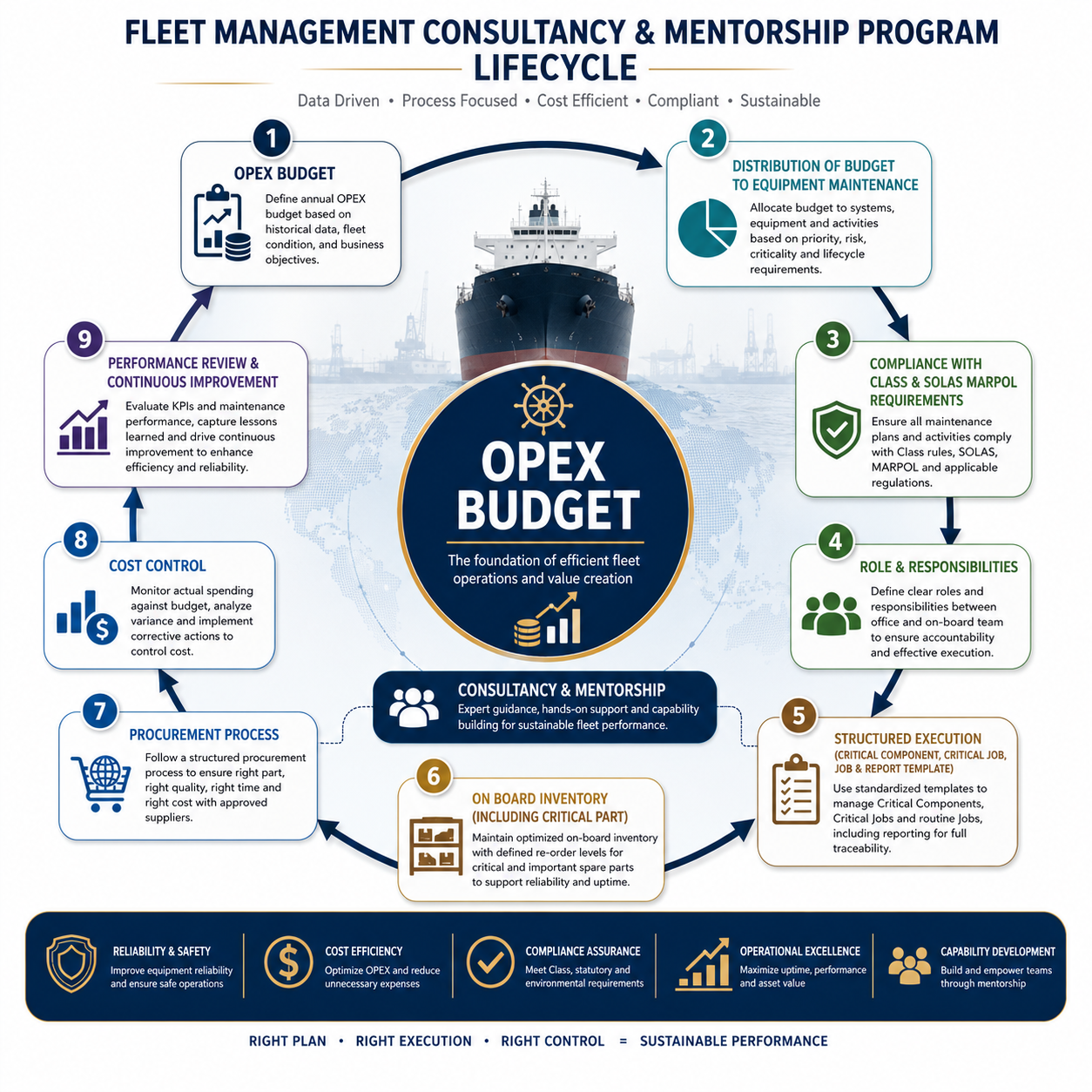
28
Jun
Fleet Technical Operation Expenses (OPEX)
Effective fleet management begins with a comprehensive understanding of Technical Operating Expenses (OPEX). More than an annual budget, OPEX serves as a strategic financial framework that ensures every vessel remains safe, reliable, compliant, and operational throughout its intended service life. A well-developed OPEX plan enables ship owners and operators to forecast, allocate, and control the financial resources required to support every aspect of vessel operations, while minimizing unexpected expenditures and protecting long-term asset value.
Read More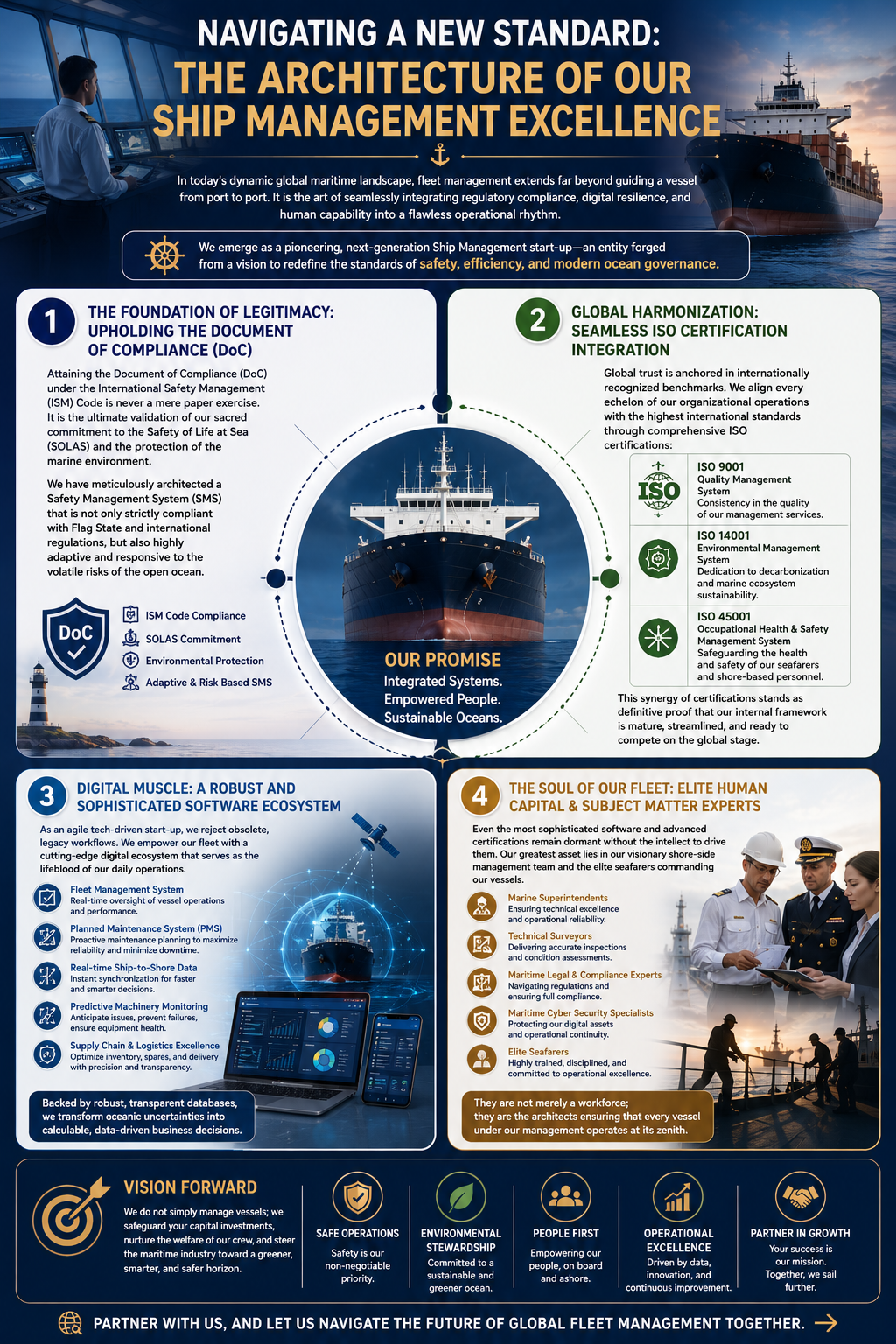
27
Jun
The Architecture of Maritime Excellence: Redefining Modern Ship Management
In today's dynamic global maritime landscape, fleet management extends far beyond guiding a vessel from port to port. It is the art of seamlessly integrating regulatory compliance, digital resilience, and human capability into a flawless operational rhythm. We emerge as a pioneering, next-generation Ship Management start-up—an entity forged from a vision to redefine the standards of safety, efficiency, and modern ocean governance.
Read More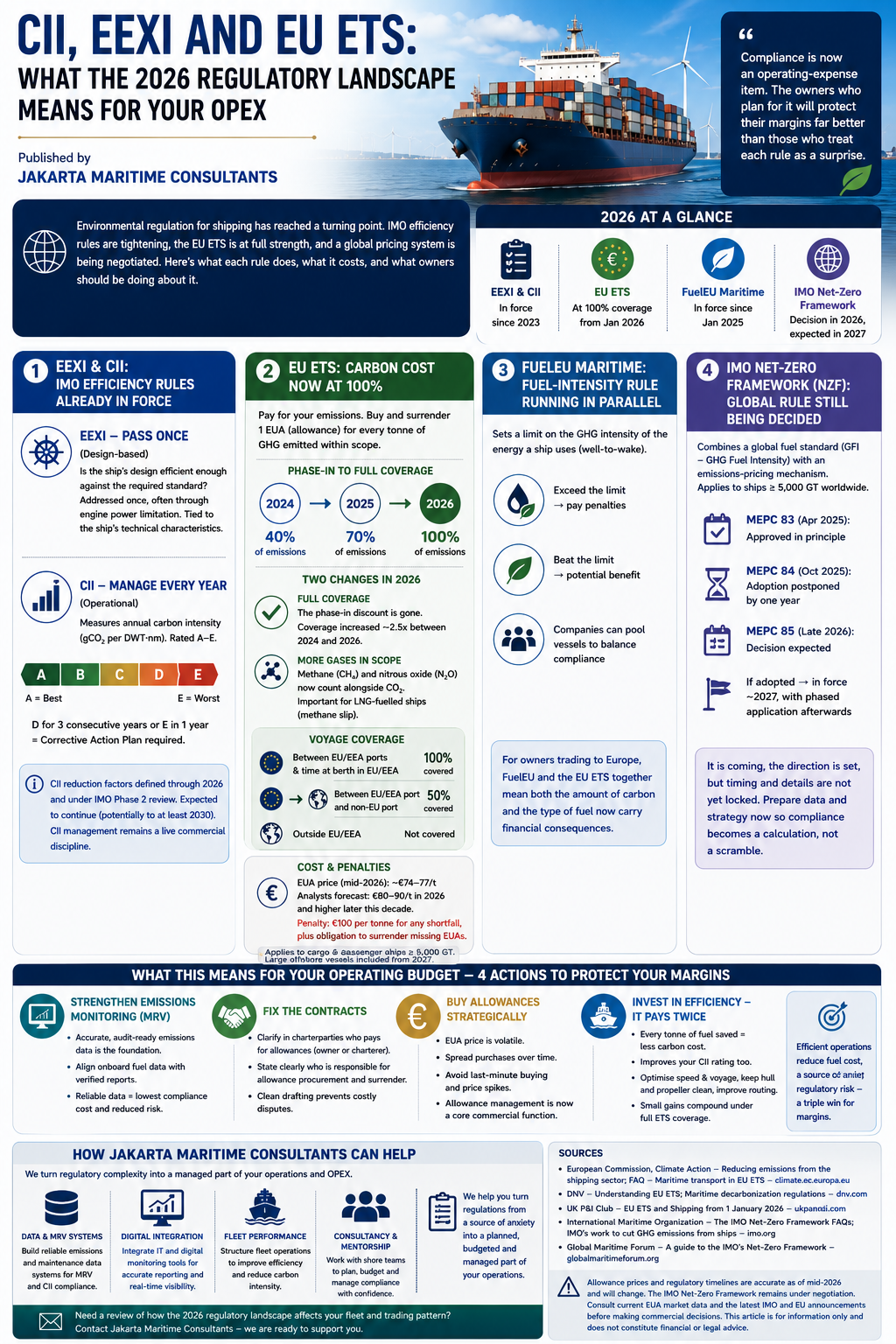
26
Jun
CII, EEXI and EU ETS: What the 2026 Regulatory Landscape Means for Your OPEX
For ship owners, 2026 marks a turning point in how environmental regulation hits the bottom line. Rules that were once described as “coming soon” are now live and carrying real costs. The European Union’s carbon market for shipping has reached full strength, the IMO’s efficiency ratings continue to tighten, and a global pricing system is being negotiated that could reshape fuel economics for the entire world fleet.
Read More